Artisans
How These Pieces Are Made
Amba Nepal's pieces come out of small workshops in Nepal — a weaving house in Bhaktapur, a woodturner in the Kathmandu Valley, a bamboo turnery near Pokhara. We buy directly from each of them, with no import agent in between. We don't yet have photographs of the individual people who do this work, or their consent to put a name and a quote on our website, so we won't invent either. What follows is the craft itself, told as accurately as we can — we'll add the people, properly, once we've visited and they've agreed to it.
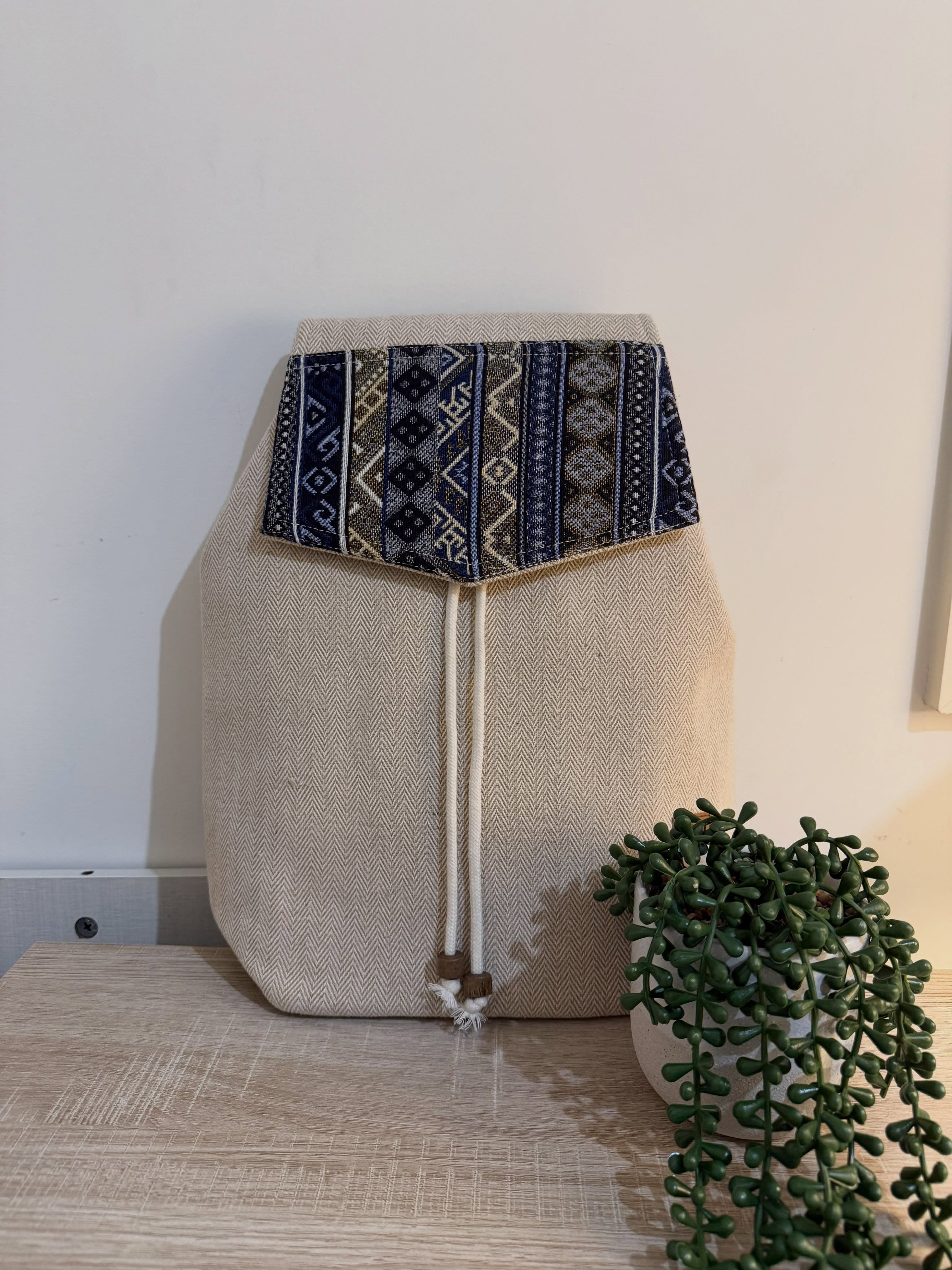
A finished Kanduk backpack in Herringbone Indigo — the hemp cloth for bags like this one is woven on a treadle loom in Bhaktapur.
The Loom
Hemp, woven on a treadle loom
Bhaktapur, Kathmandu Valley
The cloth for every bag starts on a treadle loom — pedal-driven, no motor — in a weaving workshop down a lane off the old Bhaktapur bazaar. A practised weaver takes around ninety minutes to work a metre of plain herringbone twill; a patterned panel, where the shuttle changes colour every few centimetres, takes closer to three hours.
Hemp comes off the loom stiffer than the cotton canvas most bags are cut from. It softens with carrying, not with washing — a year of being packed, slung over a shoulder and set down leaves it holding roughly the shape of how you use it. That's the trade-off for a fibre that needs far less water to grow than cotton and doesn't deplete the soil it grows in.
Dhaka Weaving
A pattern that’s counted, not printed
Bhaktapur, Kathmandu Valley
Dhaka is a supplementary-weft technique: a second weft thread carries the pattern across the base cloth, added and counted by the weaver row by row rather than printed or embroidered on afterwards. It's what makes the flap on the drawstring backpack and the trim on the tote, worked on the same treadle looms as the plain hemp — just slower.
Because the pattern is counted rather than reproduced from a plate, no two panels come out identical. A colour band might sit a row or two higher on one flap than the next, or a motif might repeat a fraction wider. That isn't a flaw to correct — it's the difference between a woven pattern and a printed one, and it's why we describe these panels as patterned rather than matching.
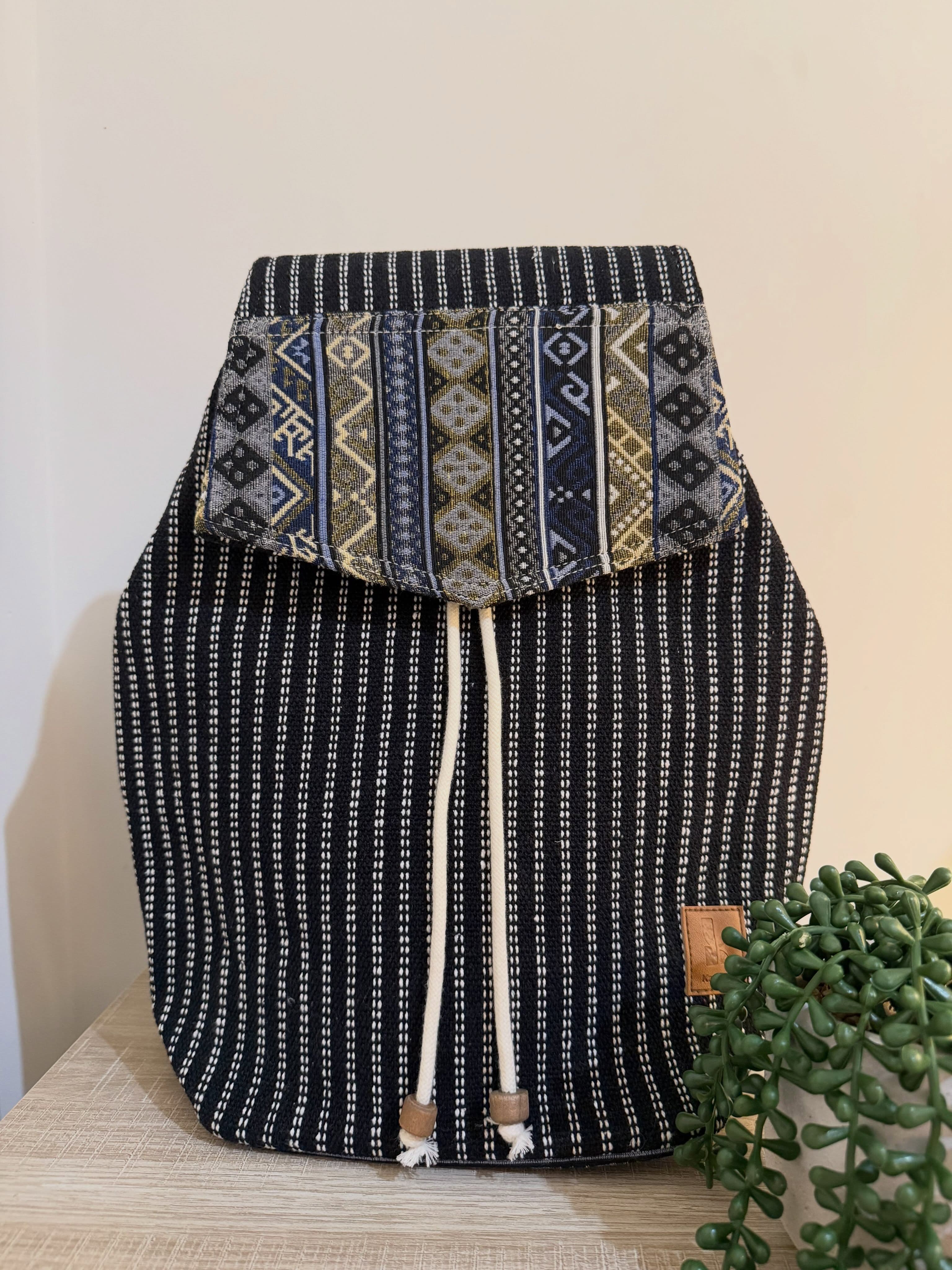
The Midnight Indigo flap on our drawstring backpack — a dhaka panel woven with a supplementary weft, thread by thread.
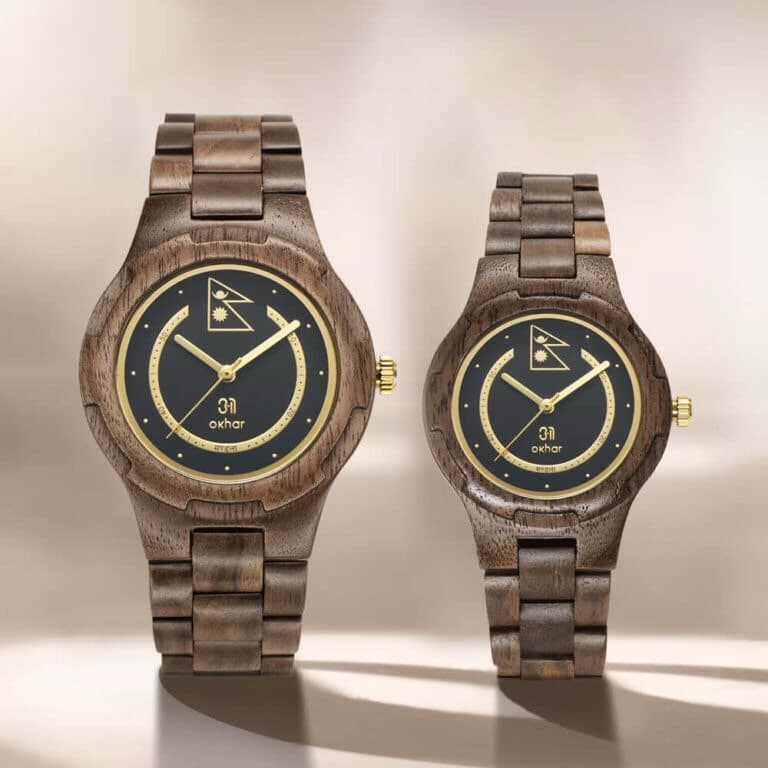
The Okhar watch in Midnight Emblem — case and links turned from seasoned walnut on a manual lathe.
Walnut Turning
Watch cases, turned from Nepali walnut
Kathmandu Valley
Okhar — Nepali for walnut — starts as a seasoned blank, roughed out and shaped on a manual lathe. A single case takes around forty minutes of lathe time, then five grits of sanding before it's finished with oil rather than lacquer, which keeps the grain open enough to feel under a thumb.
The links on the wrist band are cut and shaped the same way, then sized at home with the pin tool in the box. Because each case comes from its own blank, the grain runs a little differently on every watch — two cases from the same batch still catch the light differently, which is the trade-off of a lathe over an injection mould.
Bamboo Turnery
One length of bamboo, turned around steel
Pokhara
The tumblers start as a single length of bamboo from managed stands near Pokhara, harvested on a rotation that leaves the root system to keep growing rather than clear-felling the stand. It's turned so the node lines — the natural rings in the cane — run unbroken around the body, then fitted snugly around a double-walled steel liner.
The inside of the liner is sealed with a food-grade lacquer, the one step in the process that isn't solvent-free — we say so plainly on our sustainability page rather than let the word “natural” cover for it. The outside stays bare bamboo, which is why we ask you to towel-dry the sleeve instead of leaving it wet.
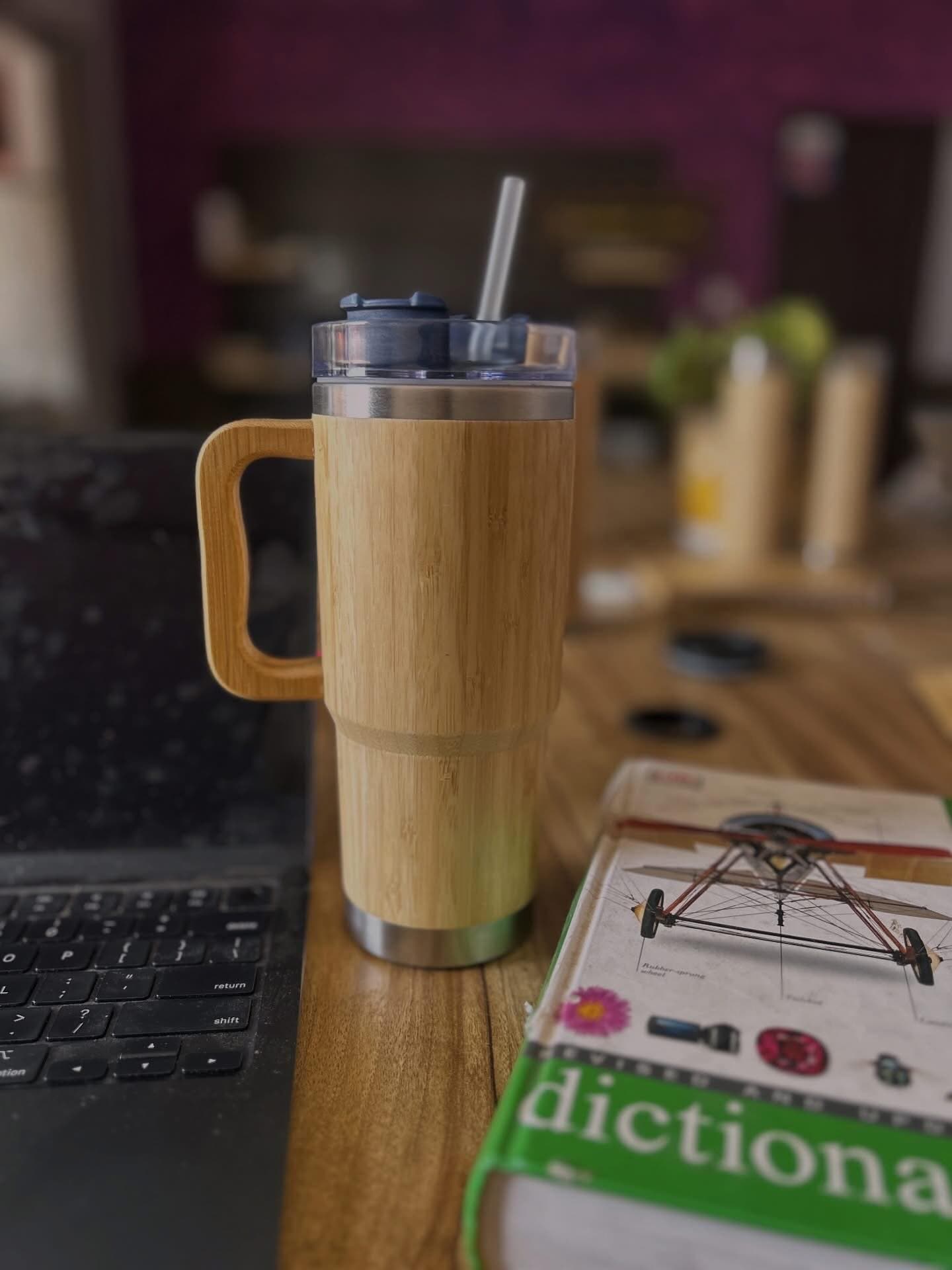
Our bamboo travel tumbler — one length of bamboo turned around a steel liner, sealed on the inside.
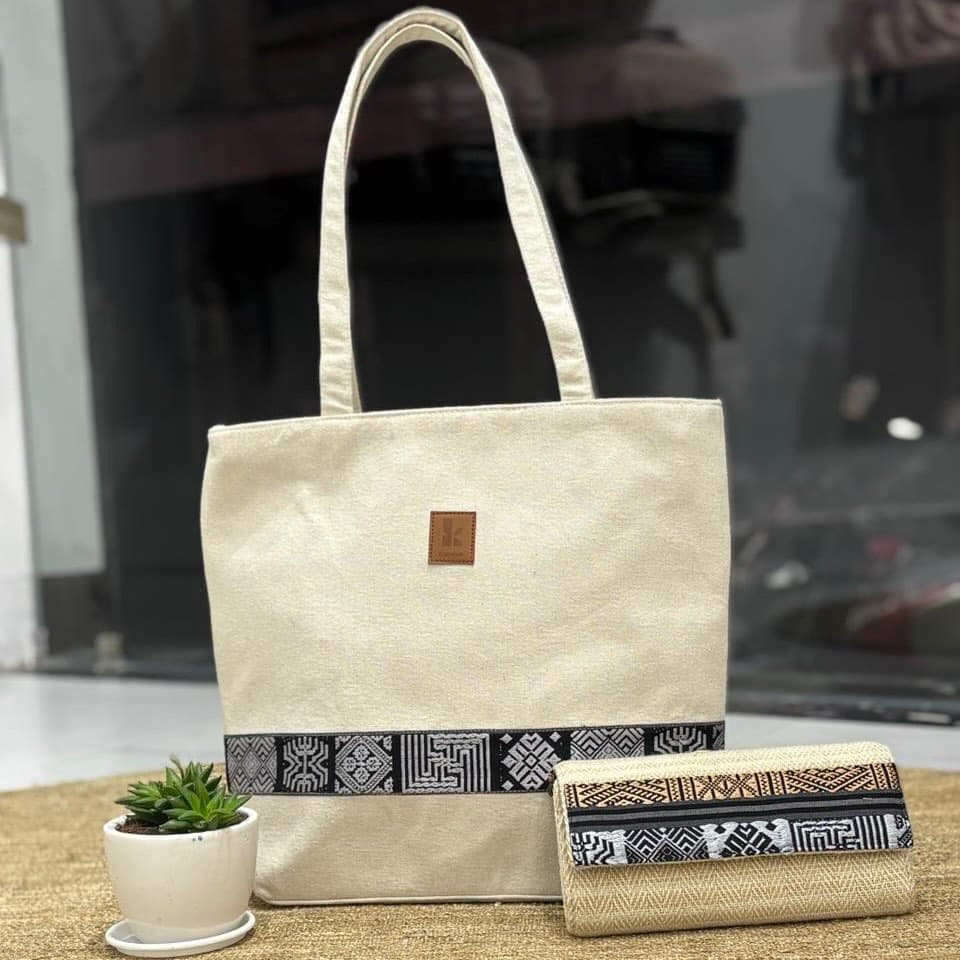
The Kanduk tote in Natural Canvas — cut, stitched and finished with a hand-stamped leather tab, in the same Bhaktapur workshop as the weaving.
Cutting & Stitching
Where the cloth becomes a bag
Bhaktapur, Kathmandu Valley
Once cloth comes off the loom it moves to the cutting bench in the same Bhaktapur workshop, where it's cut against paper patterns that haven't changed much since our first order — offcuts are kept for smaller pieces rather than binned. From there it's stitched into the finished shape: drawstring collar, gusseted base, the dhaka panel set into the flap.
The last step is the leather — a small tab of vegetable-tanned hide, stamped by hand with the Amba Nepal mark and sewn on last. It's a small detail, but it's the one part of every bag that's finished by a single pair of hands from start to end, rather than passed along a bench.