Sustainability
What We Use, and What We Haven't Solved
Materials, what 'handmade' actually means on our products, how we pack an order — and the parts of the process we haven't fixed yet. We'd rather tell you than let the word 'sustainable' do the work.
Our Materials
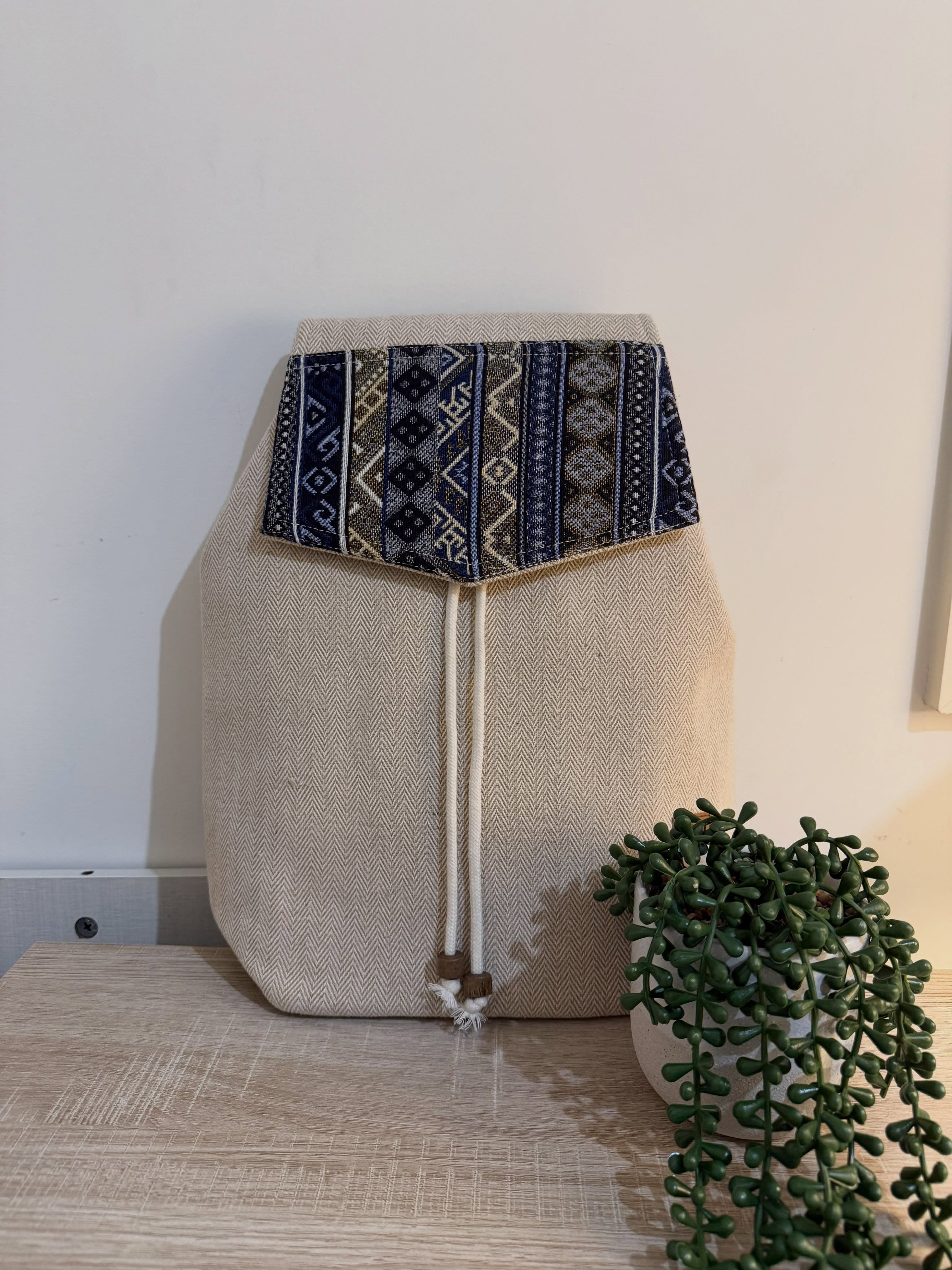
Hemp
Backpacks & totes
Grown in the hills around the Kathmandu Valley without irrigation or pesticide, then hand-spun and woven on treadle looms. Hemp needs far less water than cotton to grow and the plant regenerates the soil rather than depleting it — one of the few genuinely low-impact fibres we can buy at this scale.
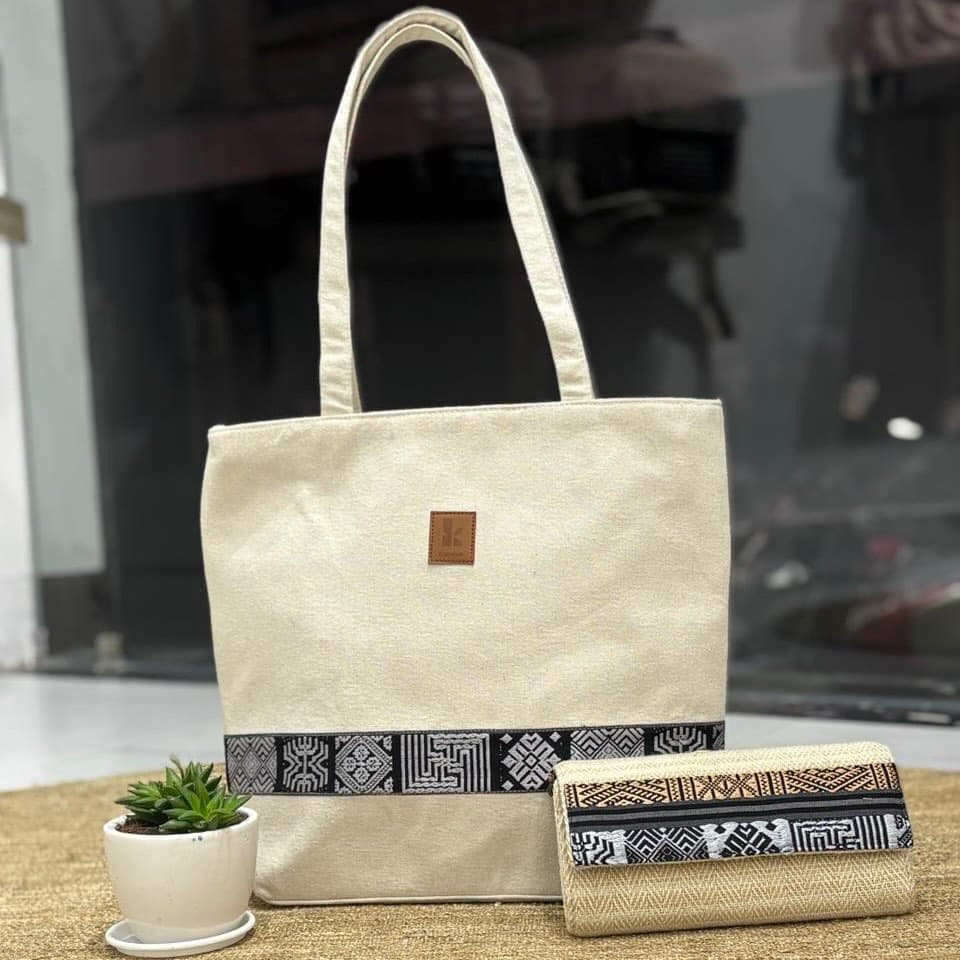
Cotton
Tote linings & trims
Undyed and locally sourced, used mostly for linings and the natural canvas totes. It isn't certified organic — the workshops we buy from are too small to carry that certification cost — but it's grown in the same region as the hemp, so it travels the same short distance to the loom.
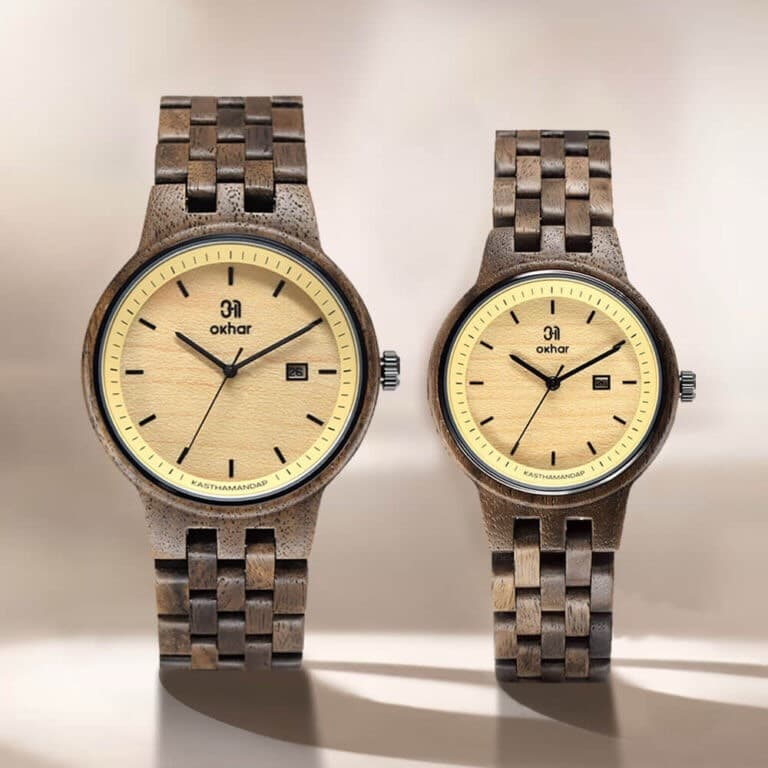
Walnut
Watch cases & bands
Himalayan walnut, sourced as offcuts and reject timber from furniture makers in the valley rather than trees felled specifically for us. It is a hardwood, so a single blank yields several watch cases, and off-grade pieces with heavy grain go into the cases we sell as seconds rather than the bin.
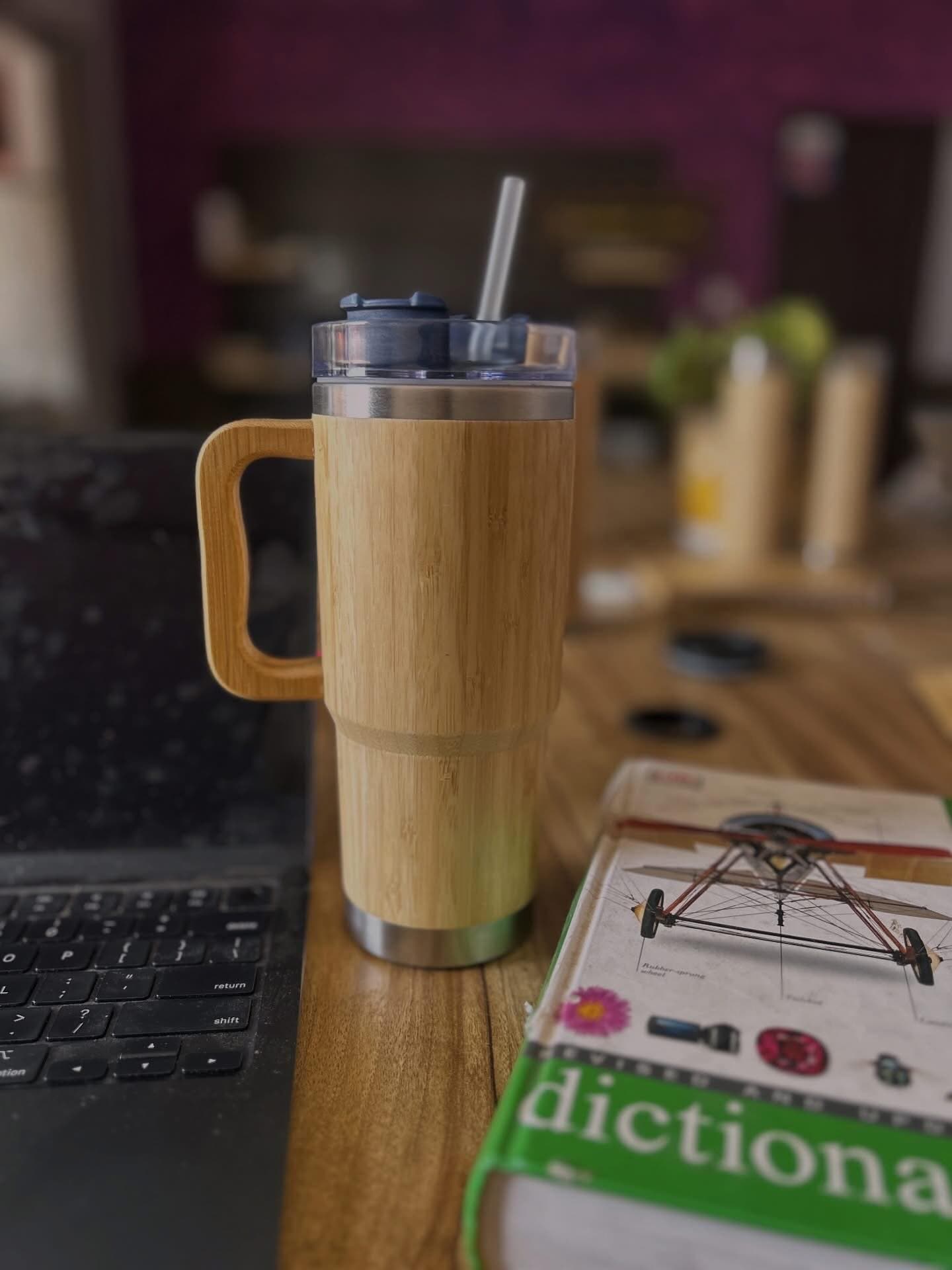
Bamboo
Tumblers & drinkware
A fast-growing grass rather than a tree, harvested from managed stands near Pokhara on a rotation that lets the root system keep growing. It is sealed with a food-grade lacquer on the inside, which is the one step in the process that is not solvent-free — we say more about that below.
What “Handmade” Actually Means
We use the word carefully, because it gets used loosely elsewhere. On our bags, the weaving, cutting and stitching are all done by hand at a bench or a treadle loom — no power looms, no cutting dies. On our watches, the case and band are hand-turned on a manual lathe, but the quartz movement inside is a bought-in component, the same as it would be from any watchmaker at this price. On our drinkware, the bamboo is hand-turned and the steel inner liner is a bought-in part.
So: the parts a human being shapes with tools are handmade. The mechanical and electronic components inside them are manufactured, sourced the way small workshops everywhere source them. We would rather draw that line clearly than let “handmade” imply more than it means.
Packaging
Orders leave our Sydney fulfilment partner in a recycled kraft mailer or box, sealed with paper tape rather than plastic. Void space is filled with shredded cardboard offcuts, not loose plastic chips. Watches travel in a small kraft box wrapped in tissue paper, cushioned rather than boxed in moulded plastic.
- Kraft mailers and boxes — recyclable kerbside, not compostable at home.
- Paper tape, not plastic — goes in with the box, no need to peel it off first.
- Shredded cardboard void-fill instead of loose plastic chips.
- Printed order slip on recycled paper, no plastic sleeve.
What We Haven't Solved Yet
A page like this can read like a list of achievements. Some of what follows isn’t — it’s a plain list of the parts of the process we know aren’t resolved yet.