· 4 min read
Inside the Bhaktapur weaving workshop
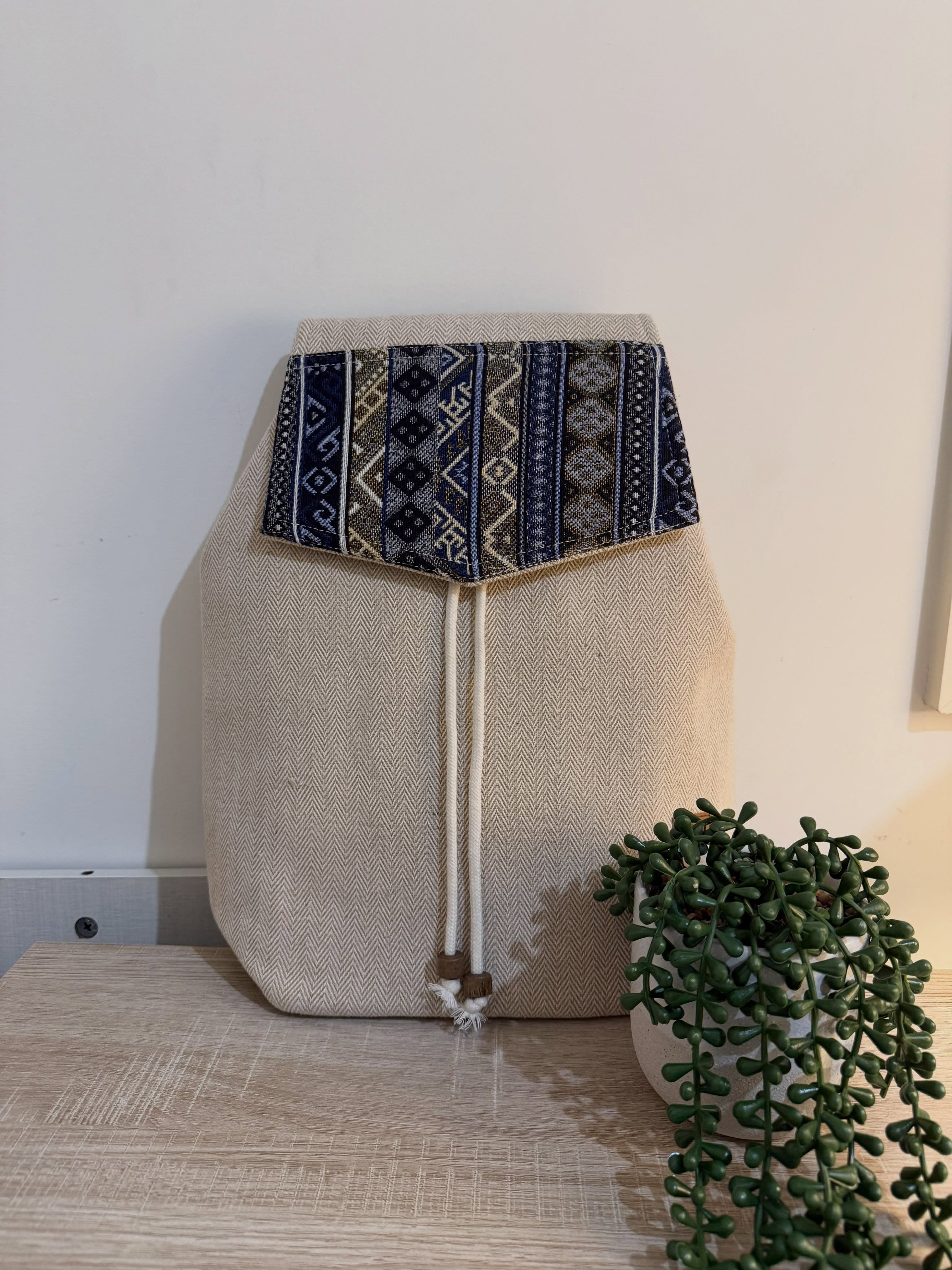
The workshop sits down a lane off the old Bhaktapur bazaar, in a building that has been a weaving house for three generations. Six treadle looms run most days, each one worked by the same weaver from warp to cloth — nobody hands a piece off halfway through.
Hemp yarn arrives from a spinner in the hills west of the valley, undyed. It gets washed, dried on the workshop roof, then set on the loom in whatever pattern that week's order calls for: a plain herringbone twill for totes, or the banded ikat detail that becomes the flap on a Kanduk backpack. A metre of the plainer cloth takes a practised weaver about ninety minutes; the patterned panels take closer to three hours because the shuttle changes colour every few centimetres.
Once the cloth is off the loom it goes to the three stitchers who cut and sew it into bags, working from the same paper patterns Amba Nepal has used since the first order. Off-cuts are kept and used for the smaller pieces — pouches, card wallets — rather than thrown out, which is as much a workshop habit as it is anything we asked for.
We visit twice a year. The order book is agreed with the workshop owner in person, in Nepali rupees, before a single metre is cut — the same arrangement described on our Our Story page.