· 3 min read
What "handmade" really means here
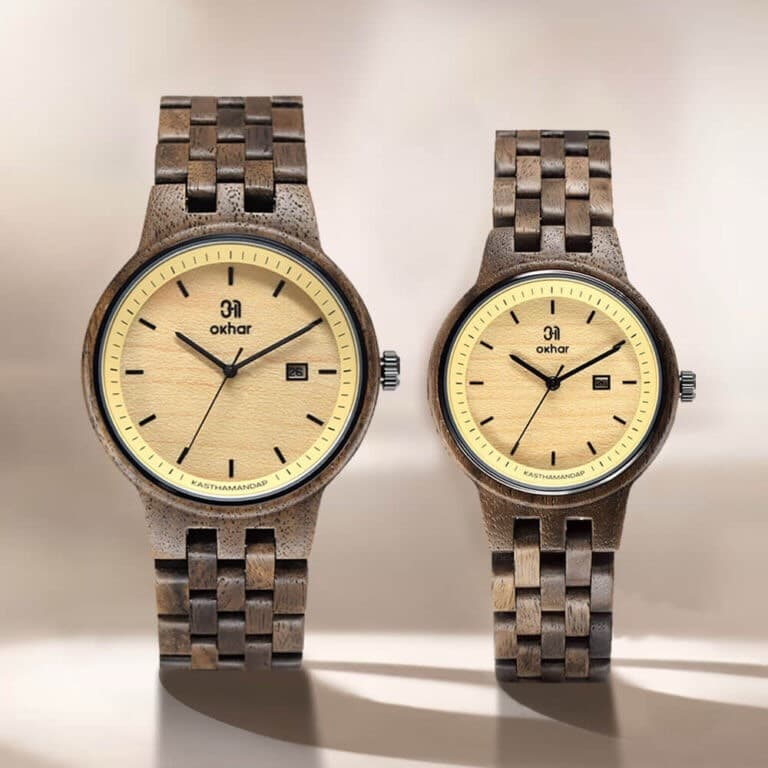
"Handmade" gets used loosely enough in retail that it is worth being specific about what it means on our watches, because not every part of one is made by hand and we would rather say so than let the word do the work.
The case and band links start as rough-cut walnut blanks, shaped on a manual lathe by a woodturner in the Kathmandu Valley — this part is genuinely hand-worked, and it is the slowest step in the process: a single case takes around forty minutes of lathe time. The quartz movement inside is not handmade by us or anyone we work with; it is a standard Miyota movement, sourced the way almost every watchmaker at this price sources one, and we are not going to pretend otherwise.
The finishing — sanding, oiling, fitting the movement, setting the crystal — is hand work, done at a bench rather than on a line. Two watches from the same batch will have faint differences in the wood grain because no two blanks are identical, which is the trade-off of the lathe over an injection mould.
So: the case is handmade, the movement is a bought-in component, and the assembly is hand-finished. That is the honest breakdown, and it is also why two watches never look quite the same.